When I write, I often create timelines as a form of writing, and in worldbuilding they’re very important to me. So I wanted to cover their value for you as worldbuilder, writer, game designer, and so on. Also it sort of justifies my love so I don’t feel weird.
(Oh, and yes, I’m a Program Manager so you can guess I’m really biased towards Timelines professionally).
So here’s why I love Timelines . . . world building wise, that is.
You Know Your History
Having a timeline is pretty integral to worldbuilding because stories happen in a place that has a past. Recent events have one impact, past events another. Two people interact because their timelines intersect, two empires come to blows because they are competing for the same space at the same time. Your world was made at a certain time and the gods will return at another.
It’s actually too far out to say that worldbuilding is a way is all about timelines.
The value of timelines therefore is making sure you know what’s going on, why, and when. If you’ve ever read a story where the history was all too “timey-wimey” you know what I mean – imagine as a writer keeping track of that . . .
Provides Realism
Having good timelines also means that your readers/players will find the worlds more believable. Think of what a timeline brings:
- A sense of cause and effect – and in turn a sense of stakes that cause can have effects in the future.
- A sense of believability. Good understanding of timelines means a solid, believable world because of the cause and effect. An unrealistic setting can be very realistic when its history makes sense.
- A sense of empowerment. Especially important for gaming worldbuilding. To see the past in turn is to believe you can influence the future or know why the characters in a game are doing what they do.
- Proper conversation. Ask how many of our conversations are about the past. Just think of what it means in writing/creating conversation in your settings.
Good timelines means believability.
They Stabilize The World You Build
I strongly recommend reviewing your world (and story, see below) timelines now and then. When you have good timelines and good continuity, a review can also help you polish your world, head off issues, and in general write better.
We’ve all made writing mistakes. But when you have a timeline, regular review can polish, strengthen, and improve your world. That timeline itself is a powerful tool.
Even if you don’t think you need the review . . . well it’s there in case you need it. You always have it there just in case . . .
Timelines Prime Awareness
Building timelines as part of your world-setting also makes you aware. The very act of contemplating interactions and so forth helps you become more intimate with your setting. Even f you don’t enjoy timelines, they are ways to truly know your world.
I find that taking time for timelines means that you develop awareness of so much more. Much as it’s good for readers/players you believe the world, for you it means a sense of what it’s all about.
Helps You Create Tales
The flipside to the centuries, aeons, and more of history that you have created is that when you’re good at doing timelines (say, in worldbuilding), that it makes storytelling easier.
I use timeline based storytelling when I write or run RPGs. I figure out what’s happening, how things interact, and what happens. I actually have even kept timelines of various characters/groups an then looked to see how they intersect. Literally, the story just unfolds as the different “timelines” interact.
This can be great for adding structure to your writing or creating a cause-effect chart for a game:
- Determine what happens when.
- Move the “timeline” along and determine how events intersect.
- Those events that are important to the players/readers/etc. are the ones that become prominent.
- Write/implement what’s important (and track what may be unseen).
Over time I find this method just becomes habitual. Which is good if you’re doing a complex tale or one of those mega-multi-ending visual novels.
Timelines Jumpstart Your Imagination
Well you may have all sorts of things going and your story is easy to write. Except for those moments where your imagination locks up and you’ve got a world with nothing happening.
This is where your Timeline keeping helps.
Read over the timelines in your world, review unused elements or hanging lines, or events tat had wide repercussions and see what they inspire. It’s playing “what if” or “what may happen’ with your own world, and can quickly result in many ideas.
Provides Good Organizational Skills
Working with timelines also teaches you good organizational skills. I’m not joking here – good worldbuilding needs good organization, and timelines are pretty much all organization.
Making the effort to keep good timelines (as needed), write with them, etc. just makes you better at keeping your ideas organizing and your worldbuilding. It develops good habits because you put a lot of work into this.
It might even help you elsewhere. I know a few cases where my world building record keeping was educational in my career, teaching me about writing and organizing documentation.
Timelines Reveal Flaws
Working with Timelines is also a way to find out where you have, are, and will screw up.
First, having good timelines reveals, when reviewed, where you made mistakes and need to fix continuity.
Secondly, having good timelines lets you double-check what you’re doing and think about current writing or active game development in an appropriate cause-effect manner.
Third, reviewing timelines keeps you primed (as noted) so you’ll be less likely to mess up. When your last review reminded you that the Dwarves are facing ecological catastrophe, you’ll make sure to mention it and eventually have it happen.
Timelines Let You Stay Productive
You don’t want to write, code, or do art. But you want to do something with your world.
Go flesh out some timelines. Go on, figure out what happened in the Boring Century, or work out the exact details of the Rival Band’s early days. It lets you be productive when you’re not up for heavy lifting, its fun, and it provides all of the above advantages.
Timelines Can be Fun
If you’re like me, messing around with Timelines is also just plain entertaining. Sometimes we need a break and want to come up with the history of an obscure wine in our setting because.
Again, though, this IS me.
Closing
I love Timelines, as you can tell. The advantages are really profound.
I also find that no matter what methods of the above appeal (or don’t appeal) to you the very exercises of some making you better at all the others. Writing with timelines makes you a better note-keeper, fleshing out timelines during writer’s block inspires you, etc. Working with Timelines in any extent improves your skills in all.
Plus, of course you have something to stick on a wiki or a blog or in a guide later.
. . . where your fans will catch errors or come up with fanfic that you never expected. But that’s the risk you chose . . .
– Steven Savage
Fairy tales are a popular sources for adaptations. Disney grew on the strength of Snow White and Cinderella. Of late, the trend has become remaking the tales in a darker, grittier version. TV series like Grimm and Once Upon a Time and movies like Tim Burton’s Alice in Wonderland* have taken classic tales and explored the darker side. Even Supernatural has explored American mythology on its way to popularity.
Hansel & Gretel, Witch Hunters was meant to cash in on the trend. Released in 2013, though originally scheduled for early spring 2012, Hansel & Gretel continued the classic fairy tale of two children abandoned in a forest who find a cottage made of candy and must escape the witch who lives inside. Like most fairy tales, the original story of Hansel and Gretel warns children to be careful, to not succumb to desires, like eating too much candy, and to respect other people’s homes.
The movie tells the tale before the credits, using it as a mini-origins story. The credits were used to show Hansel and Gretel’s career of hunting witches using animation based on the artwork of the purported period. When the live action returns, Hansel, played by Jeremy Renner, and Gretel, played by Gemma Arterton, are grown up and have been brought in by the mayor of Augsburg to rid the town of witches and find the children taken by them. However, the head witch, Muriel, played by Famke Jannsen channeling her inner Morticia Addams, is using the upcoming blood moon to make sure that all dark witches will no longer burn on pyres. Along the way, the witch hunting siblings run into a fanboy who has a collection of their exploits and a poster of Gretel on his bedroom wall.
Hansel & Gretel, Witch Hunters is well aware of what sort of movie it is. It doesn’t take itself seriously, yet shows equal amounts of horror, action, comedy, and drama. The weapons the siblings use add to the over-the-top nature of the film; Gretel carries a double-barrelled, fully automatic crossbow. The movie becomes Strawberry Fields, from Casino Royale, and Hawkeye, from Marvel’s The Avengers fight the supernatural. Yet, it works.
The movie is a re-imagining of the fairy tale, continuing the story of Hansel and Gretel past their defeat of the witch of the candy cottage by using her own over agaisnt her. Hansel & Gretel, Witch Hunters expands the story and the setting, adding twists that both surprise and follow from the characters while still keeping a sense of fun in the mix. The writing showed an understanding of the fairy tale and an eye on how a pair of orphans could survive while adding little quirks, like the fanboy, that spoke to the desired audience.
Next week, Dredd.
* Yes, Alice isn’t a fairy tale, but does share some characterstics of such a story.

Previously I discussed how pandering to your audience was a bad thing. It would break your world, confuse your technique, and risks humiliation – as well as the fact you’ll compete with people far better at selling out and far less ethical than you. i noted It’d be better to chose marketable premises or pick appropriate “views” on your world if marketing was important – and those can be rewarding approaches.
Having covered the danger of pandering to other people, I want to focus on the one person you want to avoid pandering to.
Yourself.
See it’s bad enough when you try and bound and twist your imagination just to tweak other people’s buttons. But when it’s yourself you’re pandering to, you enter a whole world of conceptual hurt. If you’ve ever read a book where the author was clearly writing with one mental hand down their psychological pants, you know what I mean. You how how their world (and their games or books or comics) look – a pile of wish fulfillment and personal delusions.
For some authors, you wonder if they didn’t even need you as an audience, – they were just going over their own fantasies. And when they do have an audience for their self-pandering creations . . . you’ve probably seen those. The kinds of audiences people look at and just wonder if they know how they look.
Sure, sometimes self-pandering sells. It may cultivate an audience because you hit the setting sweet spot for people like you. But my guess is that’s probably not your ambition.
(Or if you want a fanatic audience, you want one of a good quality).
But the pandering worlds where the author lives their own fantasies trundle out. Let’s look into just what’s going on.
Why People Do This?
I’ve seen many a book, movie, comic etc. that was really just mental masturbation and personal pandering. It’s honestly something that’s fascinated me for some time – just why do people do this, especially because it can end in humiliation?
I’ve found these reasons:
- Ideology. Some books and tales are meant to express or support a given ideology. They’re really tracts, manifestoes, or rants with characters. Or things close to characters.
- Wish fulfillment. The author is basically enjoying living their fantasies. Sometimes this can actuallybe engaging if it’s done in fun, but can take weird or odd turns.
- “Told you so.” Some worlds are built as “counter settings” to something people disagree with. They want to respond to ideas, other works, etc. by building the opposite. Usually because their ego is involved – though I’m not going to argue with the idea of just exploring the opposite of an idea.
- Double down. Sometime people take an idea and then double down on it to make a point. ever read a book that seemed to be a previous pock turned up to 11? you get the idea.
- Assumptions. Some people think that what they like everyone likes, and pour themselves into their world. Sometimes they’re right, sometimes they’re just humiliated.
You’ve probably seen these yourself, and seen some particularly humiliating examples. However, when you think about it, Self-Pandering is not only bad, it can be even more painful than regular pandering . . .
Where Self-Pandering Collapses
You’ve seen that book or game that just seems so . .. self-indulgent. They have a particular sense of disaster about them that’s often worse than the usual results of pandering to others. Regular pandering, after all, at least thinks about the audience, but self-pandering has a particular way of blowing up.
These are the things that plays into those particularly incandescent explosions of bad continuity:
- Self-delusion. It’s easy to think that other people feel the way you do and want the same things. In turn, you may not see that you’re pandering to yourself and no one else. This lets you get awfully far along before your worldbuilding collapses.
- Invisibility. People may not be deluding themselves about their own self-pandering, but they may not see it. They can’t see how they’ve projected their own wants and needs onto the world because they’re so used to them. Cases like this are actually a bit sad because they honestly don’t mean it – and I’m sure we’ve all done this.
- Obviousness. Self-indulgent world building is often so . . . obvious . . . that it’s outright humiliating. You may not see it due to the above two factors – and it can be crashingly painful when you do. You may be the last person to see how you’re pandering to yourself.
I’m sure you can think of several painful incidents like the above. Hopefully none you’ve experienced – or at least experienced publically.
Avoiding Self-Pandering
So how do we avoid doing this to ourselves? How do we avoid self-pandering and thus self-destruction in worldbuilding?
The prime rule I found is this – your world building should surprise you.
If while creating your world your conclusions shock you, if you find unexpected results, then you’re on the right track. If what you’ve made isn’t what you expect, that’s a sign that a world is truly evolving from your efforts, as opposed to being your desires codified in world format.
In fact, this is a good policy anyway – you don’t want your world to meet any kind of expectations. You want to find your imagination has brought it to life. you want it to transcend expectations. You want to be shocked.
Look for those moments of surprise. If you don’t see them there’s a chance you’re really not diving into your world. If you do see them, then it’s a sign of both good world building, but also a sign you’re either not pandering to yourself (or others) . . . and if you are you’re breaking through it.
I’ve had this happen several times in my worldbuilding and after awhile it’s delightful. You know you’re onto something when things make you go “where did that come from.” I find in time that such shocks are almost addictive as each one is a sigh that your setting is alive.
Shocking is what you want. In a good way.
A Few More Tips
Beyond the rule of “be shocked” there are a few more tips I can provide to help you avoid self pandering:
- Be aware. Just keep an eye out on your world building to look for self-pandering. Be on the look out for regular pandering, but chances are if you’re doing that you’re aware of it. And, hopefully, a bit ashamed.
- Learn to let your world be itself. As noted, a good world comes to life on its own – give it a chance. Trust your creation.
- Disagreement is progress. When your world doesn’t work the way you expected, when it doesn’t always line up with itself, that’s progress. It may be that you’ve surprised yourself or found a flaw to fix.
- Run with your inspirations. Go on and explore and play with ideas. That fun, that joy, can keep you from getting dragged into pandering to yourself – and others – though it can backfire at times and become self indulgent.
Closing
Self-pandering is perhaps a greater enemy of good world building than pandering to others – as it plays into your ego and is missed due to a variety of reasons. Fused with other forms of pandering and it could be quite destructive.
But when you look for those shocking moments, those moments that surprise you, and when you practice good world building, you can avoid it.
– Steven Savage
Whew, what a busy week – it seems every day had something to occupy my time (or cleaning up after doing other things). Hope you’re doing well!
- I’ve got a potential new contributor to the codex! Stay tuned.
- As you saw I had a guest post from my friend Serdar. Serdar writes some insightful stuff on media, so I’m hoping to reprint more here.
So how are you doing?
A change of plans this week. I’ve been holding on to some items too long and I realized that I hadn’t had a round up last month. On with the show!
A Game of Thrones, the Movie
With the TV series catching up to George R.R. Martin’s writing, something needs to be done. One potential fix, feature-length movies. The movies would be prequels, set 90 years prior to the start of the books. This should give Martin the time to finish or at least pad out the series long enough to prevent the TV series from overtaking.
Jem and the Holograms to get film treatment.
Truly outrageous! The movie has a webpage set up where fans can make suggestions on plot and casting and submit audition video. However, Christy Marx, the creator of the original series, is not involved. How this will affect the movie remains to be seen.
No more Inspector Morse adaptations?
Creator Colin Dexter has added a clause in his will that will prevent other actors from playing Inspector Morse. He feels that the performances of both John Thaw and Shaun Evans cannot be surpassed. The clause can be challenged, but it is likely that Dexter’s estate will agree with him.
Left Behind movie series to be rebooted.
Nicholas Cage will star in the remake of the adaptation of the first of the Left Behind books. Release date has been announced for October 3. The first adaptation was by Kirk Cameron in 2000, with the sequels released direct-to-video.
Fox to spin-off a Mystique movie while Sony does the same with the Sinister Six.
While Marvel Studios is busy with the Avengers, the licensees aren’t content to be left in the dust. Fox has plans for a Mystique movie to go along with the Wolverine series. Over at Sony, the Sinister Six, Spider-foes each and every one of them, has signed on director Drew Goddard. The movies mean that Marvel will have more characters on screen than rival DC Comics, despite the latter’s owner, Warner, having not licensed any character to another studio.
New Sailor Moon series to debut July, broadcast includes Internet streaming.
The Pretty Soldier-Sailor is returning and can be seen through Niconico Douga, a video streaming site similar to YouTube. An account will be needed to watch but the new Sailor Moon will be available internationally. The build up has been kept low, with very little hype to create expectations.
Cracked.com lists the five adaptations that are overdone.
Beyond just naming, Cracked looks at why the movies don’t work well. The key appears to be the creativity ends with the original idea and doesn’t continue through the actual production.
Mrs. Doubtfire sequel being written.
Chris Columbus, the director of the original, has been signed, as has Mrs. Doubtfire himself, Robin Williams. The original movie hit theatres in 1993, and a sequel was attempted in 2001 but never got past pre-production. Given the age of the original movie, it may be Williams’ name that proves to be the draw.
Princess Jellyfish to get live-action adaptation.
The manga Princess Jellyfish, aka Kuragame Hime, will be getting the live-action treatement. The official site is now up. Release date is December, 2014.
[This column was originally published at Ganriki.org. Meet guest columnist Serdar Yegulalp.]
Here is a conversation I find myself having way too often for my own good. A discussion of anime X comes up, which is itself an adaptation of source material X(1). I cite a number of things wrong with X, only to be told, “Well, all that stuff was in X(1) to begin with.” Meaning the adaptation was faithful enough to preserve a piece of source material that was redolent with flaws — something the creator in me rebels against on principle. Shouldn’t the point of an adaptation be to do the best possible justice to the spirit of the material, without being the wrong kind of faithful?
I love certain things, enough to want them adapted to other media for the sake of gaining a broader audience , but not so much that I want to see them adapted with no attention paid to how the original might well need to be rethought in the light of the new medium. Much of my writing in Let’s Film This revolves around that problem, where I look at the problems of adapting anime to live action and sometimes feel it’s only slightly less tricky than getting an elephant to parallel park. The endless array of issues posed by a live-action AKIRA will serve as a great example: you can’t film that material in the West without gutting it of so much of what made it what it is in the first place.
But I shouldn’t ignore the much larger, far more prevalent, and often far thornier issue of the way manga, light novels, and other common source material are adapted to anime — and how, the vast majority of the time, they’re often preserved a little too perfectly in the process.
Why they adapt
Much of what I mean by this I hinted at in the opening paragraph, where something inexplicable or clearly flawed about a given show can be traced back to the source material being a certain way. You don’t dare tinker with the source material too much, because then you’ll be alienating the very fanbase that exists for the material.
Or so goes the conventional wisdom about such things.
One of the reasons why things are adapted across various media in Japan in the first place is because of something Ed Chavez of Vertical, Inc. once pointed out during a discussion of the light novel scene: the reason things are adapted to or from light novels (and, one could assume, any other medium) is to expand the existing demographic base for those things, because those demographics are often completely tapped out. Think of it as a Venn diagram with circles representing manga readers, light-novel readers, anime watchers, etc., with only the slighest of overlap between any two circles and barely any overlap between all of them at once. Hence adaptations, which increase the overall audience for your average franchise sometimes by a couple orders of magnitude.
So if that’s the case, why do some adaptations end up being slavishly faithful to a fault, even when they don’t need to be? This part I’m not as certain about, but I suspect it has to do with the sense — one not limited to Japan — that the creator knows best. Good or bad, s/he created the work a certain way for certain reasons, and we who have not created it but are simply adapting it need to respect that for better or worse.
I respect this thinking, while at the same time feeling it’s the wrong kind of fidelity. Yes, it’s good to honor the intentions and the work of the original creator, and not distort what they’ve done; what you end up with won’t deserve the original name. But you also can’t forget that any adapation is a chance to take a good long look at the source material and remember it’s just that: a source.
… and why they tinker
Some of these issues were exposed, ironically enough, by director Jaume Collet-Serra when discussing his proposed AKIRA live-action film. He ended up saying something I agreed with in principle — that the original comic wasn’t much of a human story — but he said in such a derogatory, unthinkingly offensive way that people rejected it. I don’t blame them: if someone told you “We’re going to adapt one of the seminal works of your subculture, even though it kind of sucks,” you’d have trouble not being offended, wouldn’t you? It’s hard not to see this as only one step removed, and maybe not even that much, from the kind of gratuitous Hollywood tinkering that gave us Dragonball: Evolution.
The other side of this, and the one which looms all the larger the more I think about it, is how anything we could call a flaw won’t always be thought of as such by the people who fall in love with a given work, whether long-time fans or newcomers. My feeling about AKIRA is that I love it because of its flaws — that the things that can be called flaws are at least as much also expressions of the uniquneness of the project. I don’t love the fact that the story manifests contempt for the human race, but I love the totality of its vision and its willingness to see its ideas through to the bitter end. Where my love for such things ends is where, I feel, the creativity of others ought to pick up — that they should see such things as one part of a dialogue, and be encouraged to continue that dialogue on their own terms.
Flaws may not be flaws to the fans. They may be what makes something worth watching in the first place. The problem is that we often have no way of telling in advance; it’s not as if there’s a rulebook we can consult that will put us in the clear as to when something — some absurd plot element, some eye-rolling twist — needs to be ripped out for the good of the whole.
On leaving well enough (or bad enough) alone
Maybe, in the end, it’s best to be faithful to the flaws, too, and let the work as a whole stand or fall on its own. But that doesn’t mean a prospective adaptation should leave all revisionism off the table — especially if it means revisionism of approach.
Still, that has to be balanced against what you gain from the changes. Many people decried the way Flowers of Evil looked nothing like its source material; why tinker with a perfectly good thing? I saw it as a failed experiment, but an interesting one nonetheless, one well worth being exposed to if only to indicate how it might be better used in another production. On the other hand, I thought the remake of Berserk actually suffered somewhat from having higher production values, by giving us a convenient level of remove from the blood-soaked, horrific, passionate core of the story. Both experiences provided lessons that were valuable, even if they came at the cost of the work itself.
The reason a work has an audience at all is because of what it is in its entirety, not because of any one thing. If a work is changed in adaptation, it should only be because the new whole that is produced will be at least as good, or better. And who can guarantee such a thing? No one, but then again creativity of any stripe has never been about guarantees.

[Way With Worlds appears at Seventh Sanctum, MuseHack, and Ongoing Worlds]
Let’s talk pandering and worldbuilding.
You want the game to sell, you want the book to be read, you want the game to be exciting. But you also want to build an interesting world and a consistent setting. However, if you did just a few things you might just sell more, just a little fan service or . . .
Don’t. Don’t do it. (more…)
Hey gang, I’m always ready to help out fellow writers, and Chris over at Ennead Games is looking for people for his site! Let’s see what he has to say!
—–
The blog/site has been going along a while now, but it’s time to take things up a notch or two. But we need your help. Our design monkeys can only work so much before they start throwing their food everywhere and getting upset. Then things get messy.
What is needed
Resources for rpg gaming and storytelling. It can be anything, from a NPC background, to contents for a generator, to maps for handouts, for any game or genre – just nothing of an adult nature. The best thing to do is to send a short proposal to EG first. You’ll either be told yes (in which case send it in ASAP) – or no (and given a reason – it might just simply be that someone else has allready sent in that idea). Shorter smaller items are prefered. If it’s long, then splitting it into parts is encouraged.
We don’t offer compensation for contributions, but if you have your own site then a link to yours will gladly be displayed. You retain the rights to your work, but grant Ennead Games the unlimited, non-exclusive right to post your resource here forever. By submitting an resource proposal, you grant Ennead Games the unlimited, non-exclusive right to publish your contribution on EnneadGames.com in perpetuity. That means you can post or otherwise use your work elsewhere, but we can keep it posted on the site forever.
—-
Go on over and give Chris a ping!
Once again, the review is about another movie still in theatres, so I’ll try to avoid spoilers as much as possible.
March turned out to be movie-filled for me, as I managed to catch several in the theatres. The first three, The LEGO Movie, Mr. Peabody and Sherman, and Veronica Mars were all adaptations. The last movie, Muppets Most Wanted, falls into an odd designation.
I’ve reviewed Muppet movies in the past, with The Muppet Movie and The Muppets. Muppets Most Wanted is a sequel, the eighth of The Muppet Movie as Bunsen Honeydew points out in the movie, and all of them coming from The Muppet Show. Muppet movies fall under one of three types. The first type is where the Muppets play themselves. The best example is The Muppet Movie, where it was sort of how the Muppets came together. The second type is where the Muppets play characters based on themselves*. The Great Muppet Caper is a good example of this second type. The third type is where the Muppets play completely different characters, usually in an adaptation. Muppet Treasure Island shows that the Muppets can be both themselves and another character in this third type. Both The Muppets and Muppets Most Wanted are of the first type of Muppet movie. This is where it gets difficult to figure out whether the lastest film is a sequel, an adaptation, or a bizarre hybrid out of Bunsen Honeydew’s labs.
Muppets Most Wanted picks up right where The Muppets ended, with the sets being struck, the props being returned, the extras going home, and even the cameras being put away. All the cameras, but one, which is still rolling. The Muppets don’t just break the fourth wall; they shatter it, twist it, and turn it into origami. After a song about making the sequel, they are convinced by Dominic Badguy**, played by Ricky Gervais, to take The Muppet Show on a world tour. The origami crane that was once the fourth wall is now a Moebius strip. Meanwhile, the new number one criminal, Konstantine, who looks very similar to Kermit, has escaped. And the camera is still rolling.
There is no doubt that the movie is well worth seeing. Danny Trejo in a song and dance number alone is worth admission. Psycho Drive-In has a full review of the movie. The question, though, is Muppets Most Wanted a remake, reboot, or adaptation, or is it just a sequel? To even try to answer that question, I had to examine the details. First, Muppets Most Wanted happily calls itself a sequel to The Muppets, which was a reboot of Muppet movies that owed its existance to The Muppet Movie. At the same time, the latest film couldn’t exist without The Muppet Show. While the rest of the movies wouldn’t exist, at least in their existing forms, there’s always a possiblility that Muppet movies would happen. Muppets Most Wanted needs The Muppet Show for the plot. Indeed, the movie shows the backstage shenanigans that happen when Kermit is removed from managing the show.
Yes, Muppets Most Wanted is an adaptation. The form is of a documentary of The Muppet Show on tour with a criminal genius using the ensuing chaos for his greatest crime, except for being a documentary. All the hallmarks of both The Muppet Show and previous Muppet movies – zaniness, camoes, self-deprecating humour, Miss Piggy trying to woo Kermit, severe damage to the fourth wall – are on display. The Muppets themselves are as people remember. Thus, Muppets Most Wanted is not only a sequel of The Muppet Movie, but an adaptation of The Muppet Show, one that has raised the bar on expectations of Muppet films to come.
Next week, Miami Vice.
* I know the Muppets are puppets, but bear with me. Each Muppet has a distinct personality that has been shown for up to fifty years.
** Pronounced Bad-zhee. It’s French.
[Way With Worlds appears at Seventh Sanctum, MuseHack, and Ongoing Worlds]
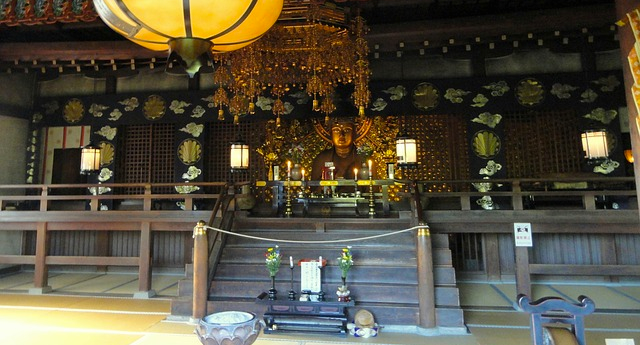
So you’re world building, but the world is basically like ours, or like a given historical place and time. You’d start building religions, but . . . you’re dealing with real religions that people practice and live right now (or the ancestors or descendants of those religions). You’re not so much creating them, but asking where they fit into your setting, what’s “real” and what you have to write.
There’s more “about” than “building.” Sounds easy, right? Not when you realize that when it comes to religion you have to . . .
- Treat as a functioning part of your setting.
- Know what you’re writing about.
- Write/describe/handle it in a realistic way (or a way that seems realistic).
- Deal with annoying people.
So you’ve got to design your “real” world, but also deal with ‘real” religions. How do you handle these challenges?
Let’s address them one by one . . . (more…)